Producing a Scalable Content & SEO Engine During Hypergrowth at Miro
Snapshot
Company: Miro
Stage: Early hypergrowth (employee ~318)
Role: Content Marketing Manager
Focus: SEO strategy, content systems, templates, and team building
Goal:
Build a scalable content and SEO foundation that could support rapid growth — without slowing the business down.
The Problem
I joined Miro just before the pandemic, as the company entered a period of rapid growth. At the time, the content organization was small: two junior content marketers and a director, and content wasn’t yet set up to scale with the business.
Three issues stood out immediately:
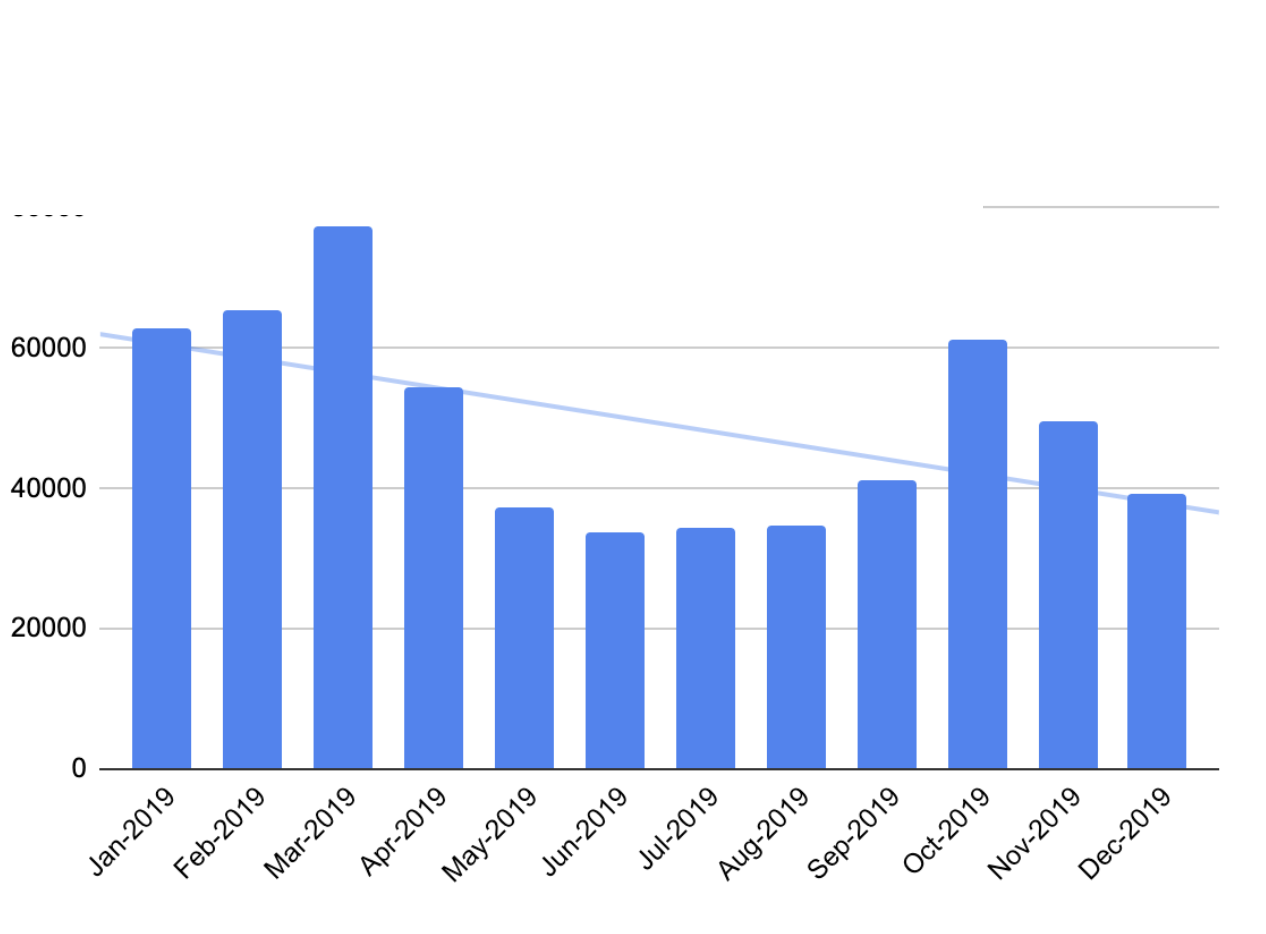
Organic traffic was declining 25% year over year, with no formal SEO strategy in place.
Content production was slow and fragmented, making it difficult to increase output.
Templates had been identified as a major growth and SEO opportunity, but there was no clear ownership or process to support an aggressive production goal set by leadership.
Individually, these were solvable problems. Together, they posed a real risk: without a scalable content engine, Miro would struggle to capture demand, compete in search, and support growth at a critical moment.
The Core Challenges
1. Declining organic traffic with no SEO foundation
There hadn’t been prior investment in SEO, and organic traffic was declining by ~25% year over year. Content topics and formats weren’t tied to keyword opportunity, search intent, or business goals, making it difficult to reverse the trend.
2. A content production process that couldn’t scale
It took roughly 3–4 weeks to produce a single article. Only about 16 hours of that time was spent on actual research, writing, and editing — the rest was lost to unclear workflows, design dependencies, and a cumbersome publishing process.
The team had recently moved to WordPress to reduce reliance on developers, but publishing still took 1–2 hours per post and remained a source of friction.
3. High-priority templates work without resources
Miro had launched a templates library, and the CEO set a goal to create 250+ templates in a year to outpace competitors. Templates also had strong SEO potential, but there was no one dedicated to managing this work.

At the same time, the company was preparing to launch Miroverse, a UGC templates gallery designed to increase template content by 10x — adding urgency and complexity.
In addition to the quota for the templates library, Miro was also preparing to create a UGC template gallery, Miroverse, to increase our templates content 10x.
Strategy
Rather than treating these as separate problems, I focused on building a single, connected content system that could:
Reverse the decline in organic traffic
Increase content velocity without sacrificing quality
Turn templates into a scalable, search-driven growth lever
The strategy rested on three pillars.
1. An SEO-driven content architecture
I established an SEO content cluster strategy, prioritizing commercial keywords supported by long-tail informational content. Keywords were evaluated based on search volume, difficulty, and product fit.
Commercial keywords typically became template pages or landing pages, while informational keywords informed guides and blog content. Content format was chosen based on search intent and competitive landscape, not a one-size-fits-all approach.
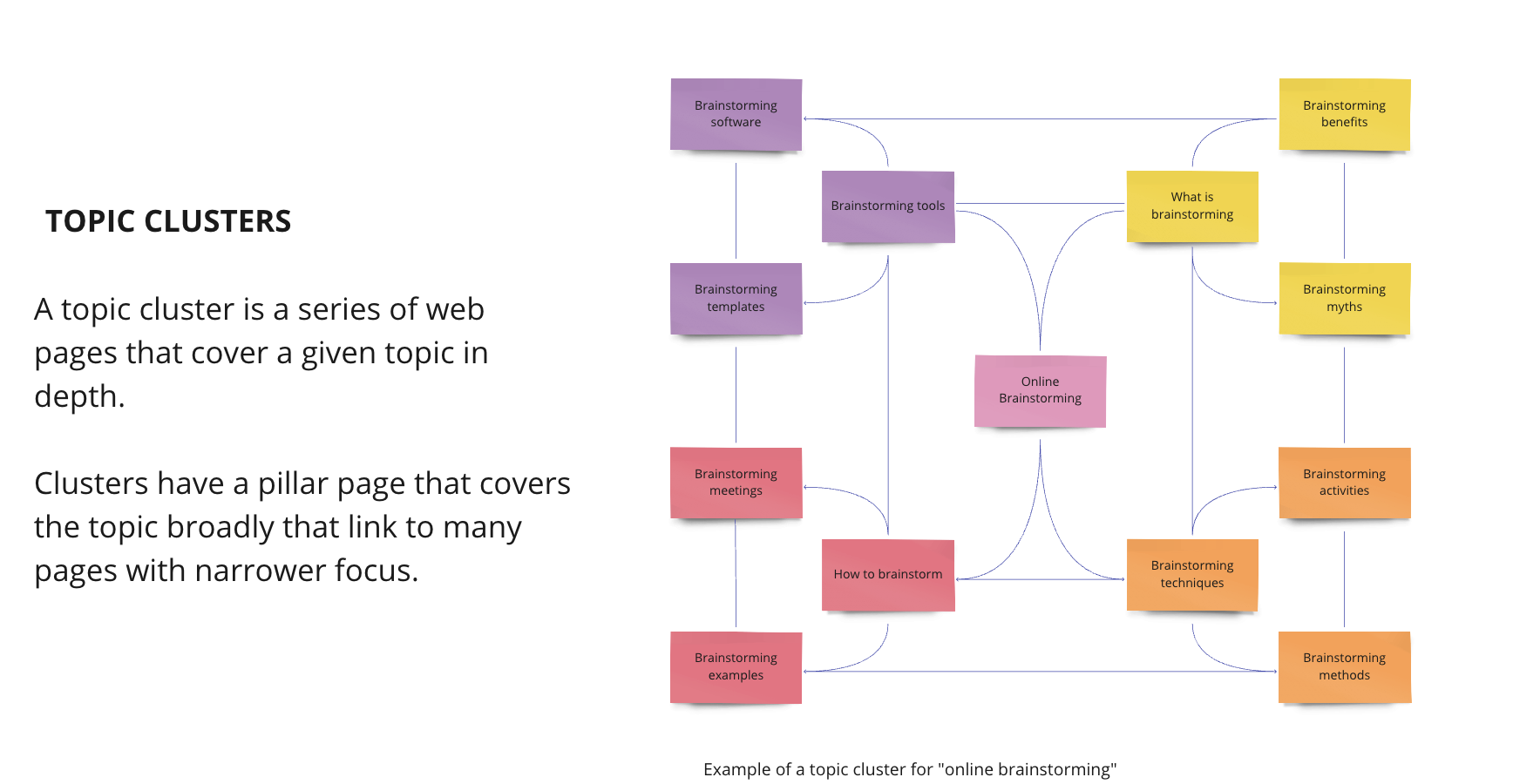
Commercial keywords were typically made into template pages and landing pages. We prioritized them based on volume, keyword difficulty, and product fit.
We also established goals and measurement based on content quality, as well as what we were trying to drive for the business.

2. Systems before scale
Before increasing output, I focused on understanding where time was actually being lost in the production process.
We identified that:
Over three weeks were required to publish a single piece of content
The majority of delays came from design dependencies and publishing workflows
The team was fielding 20+ inbound content requests per month with no clear intake or prioritization process
Because the Brand team was already using Asana, I built our content production system there, creating an editorial calendar, a standardized intake form, naming conventions, and clear task categorization. This allowed us to better coordinate with design and set expectations with stakeholders.

3. Templates as a growth lever, not a side project
Given the urgency of the templates goal, we couldn’t wait for the new content production process to be fully established.
We took a scrappier initial approach:
Prioritized templates based on keyword research and product fit
Partnered with a freelance Product Designer to create the templates themselves
Worked with freelance writers to produce SEO-optimized landing pages to support ranking and discovery

Once this initial batch was complete and a new hire joined, templates were folded into a more formal production stream managed through Asana, with clearer ownership and workflows.

Execution
With the strategy in place, I focused on execution across four areas.
SEO content production
Built content clusters across blogs, guides, landing pages, and templates
Hired and managed three SEO-experienced freelance writers producing 5–10 assignments per month
Worked with SEO leadership to prioritize technical improvements supporting content performance
Content production process (v1)
Centralized planning and production in Asana
Reduced reliance on developers and improved coordination with design
Established a repeatable workflow that could scale with team growth
Templates & Miroverse
Launched 250+ templates aligned to keyword opportunity
Supported the launch and scale of Miroverse as a UGC templates gallery
Transitioned templates into an ongoing, managed content stream
Hiring & team building
Based on immediate and longer-term needs, I identified four key roles:
Content production
Templates and Miroverse
SEO strategy
SEO writing
We prioritized hiring for content production and templates in September 2020, followed by SEO-focused roles in mid-2021, after the strategy was in place. This sequencing allowed us to scale output while maintaining quality and focus.
Results
SEO & templates
Templates became a major growth driver, increasing organic traffic by 186% year over year in the first year, with an average conversion rate of 16%.
Content production
The initial process improvements reduced production time by about one week and increased output from a few posts per month to ~10. Stakeholder satisfaction with the content process increased from ~50% to 80%, and the introduction of a satisfaction survey helped surface additional areas for improvement.
The team
By building a focused team with clear ownership and workflows, we were able to scale content production, improve quality, and support Miro’s growing content ecosystem over time.